International Safe Abortion Day 2026
Posted on September 24 2026 at 15:49
International Safe Abortion Day 2026
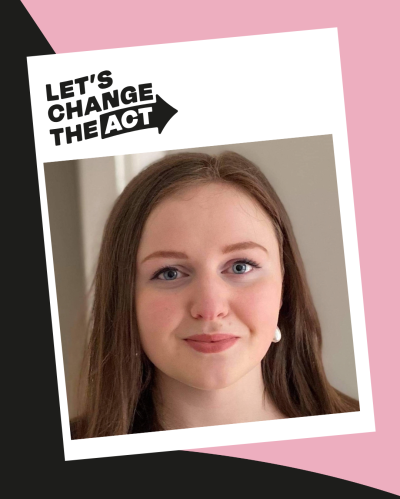 In this guest blog Let’s Change the Act campaigner Lucy Ward discusses the roots of International Safe Abortion Day.
Lucy Ward is a reproductive Rights Activist and Co-founder of Back Off Scotland.
As we mark the 21st annual International Safe Abortion Day on 28 September 2026, Let’s Change the Act wants to honour the campaign’s origins, and reflect on the movement to provide safe abortion here in the UK.
The September 28th Day of Action for Access to Safe and Legal Abortion was established in Latin America and the Caribbean, where women’s groups have been mobilising on this date for two decades to demand that their governments decriminalise abortion, provide access to safe and affordable abortion services, and end systemic stigma and discrimination towards women who choose to have an abortion.
The original name of the campaign in Latin America and the Caribbean is ‘Campaña 28 de Septiembre por la Despenalización del Aborto’, which continues up to this day. The date - was chosen in commemoration of the abolition of slavery in Brazil, which is now remembered as the day of the “free womb,” demanding safe and legal abortion for all women.
In 2011, Women’s Global Network for Reproductive Rights took September 28 global in solidarity with the women’s movement in Latin America, and in recognition of the fact that access to safe and legal abortion continues to be denied to too many women in too many countries.
Indeed, unsafe abortion continues at an unprecedented scale across the world even in 2026. It is estimated that this year 34 million women will have an unsafe abortion[1], and that 47,000 of these women will die[2] as a result.
Whilst the majority of these deaths happen in countries where abortion is extremely restricted, the UK is no stranger to the dangers of unsafe abortion – with the Abortion Act 1967 being tabled and supported so widely across Parliament and the public because of the rising numbers of deaths from women accessing care unsafely.
Before Scottish MP, David Steel, successfully passed his Abortion Act in Westminster in 1967, doctors under the common law of Scotland, were able to provide abortion care as long as they were “acting in good faith” in the interests of the pregnant woman[3]. Despite this, most doctors were fearful of prosecution – being deemed in the eyes of the law not to have acted in good faith – and simply refused to provide. Other doctors were staunchly anti-abortion, which meant that that in cities such as Glasgow, abortion was effectively unavailable[4]. With the lowest abortion rate in any Scottish city at the time, abortion was described as “notoriously unpopular”[5] amongst Glaswegian doctors.
By the mid-1950s, it was estimated that unsafe abortion was the third most common cause of maternal death[6] – largely due to the number of women who had died from sepsis, haemorrhage, or incomplete abortion. As the death toll from unsafe abortions increased, so too did public pressure on parliament to enact legal reform and protect women’s health, whilst recognising that they should have a right to choose whether or not to continue a pregnancy.
These challenges were acknowledged across the political and religious divide, and in 1966, David Steel – both an MP and a Church of Scotland Elder at the time – introduced his Medical Termination of Pregnancy Bill. Laser-focused on reducing maternal mortality rates and saving the lives of women up and down the UK, Steel garnered enough cross-party support to pass the most significant piece of pro-choice legislation in the history of the UK – the Abortion Act 1967.
The introduction of the Abortion Act 1967 heralded a landmark moment for women’s rights in Scotland, and deaths from unsafe abortion soon plummeted. Under this law, women were able to access legal abortion up to 28 weeks’ gestation if they met specific criteria: that continuing with the pregnancy would cause a risk of grave permanent injury to their physical or mental health, or that of the fetuses. These decisions had to be agreed upon and signed off by two doctors, and the procedure had to be carried out in a hospital or licensed medical clinic.
However, despite abortion being available to women in Scotland today, the constraints of the 1967 are causing barriers to access and contributing to stigma. In Scotland today, not wanting to have a child is not a legal reason to have an abortion. The way in which we provide abortion, as well as the numbers of women accessing it are starkly different to 1960s Britain. We believe the law is, therefore, out of step with how care is provided in the 21st Century and are calling for abortion to be removed from the criminal law entirely, and for a modernisation of our archaic abortion laws: to fully recognise abortion as a vital element of women’s healthcare.
On this International Safe Abortion Day, Let’s Change the Act will be reflecting on how far we have come here in the UK, the work that we still need to do, and the importance of continuing to work together across the world to make safe abortion a reality for every woman. As part of a European wide effort alongside of ten other cities, we’ll be lighting up two national landmarks green to mark International Safe Abortion Day this Monday... look out on our Instagram for more.
[1] MSI Reproductive Choices (2026). Unsafe Abortion: Consequences, Facts & Statistics.
[2] Worldmetrics (2026). Unsafe Abortion Statistics.
[3] Brown (2022). Decriminalising Abortion: Challenges for Scotland.
[4] Crook (2019). ‘A disastrous blow’: psychiatric risk, social indicators and medical authority in abortion reform in post-war Britain.
[5] Davis & Davidson. (2006). “A Fifth Freedom” or “Hideous Atheistic Expediency”? The Medical Community and Abortion Law Reform in Scotland, c.1960-1975.
[6] Drife et al. (2023). Why Mothers Died and How Their Lives are Saved – Chapter 8.
 RSS
RSSSpeak up LetsChangeTheAct